
Ultimate UK Guide to Used Car Terminology: Jargon Explained
Read about Ultimate UK Guide to Used Car Terminology: Jargon Explained on chatMOT

Research reveals a startling truth: 1 in 14 used vehicles in the UK has a mileage discrepancy. This crucial statistic underscores the hidden complexities and potential pitfalls awaiting buyers in the dynamic used car market.
Stepping onto a UK forecourt can feel less like shopping for a car and more like learning a new language. It's often filled with baffling acronyms, specific dealer slang, and technical terms that can leave even experienced drivers feeling overwhelmed.
This ultimate guide cuts through the noise. We will decipher everything from crucial finance terms like PCP and HP, to critical red flags such as 'clocking' and 'write-off' categories.
Our mission is to arm you with the knowledge needed to navigate the forecourt confidently, ask the right questions, and ultimately, drive away in a car you trust – not a costly 'lemon' you regret.
The TL;DR: Key Car Jargon at a Glance
Navigating the used car market can feel like learning a new language. For busy buyers, quickly grasping essential terminology is crucial to making an informed decision. This quick guide breaks down the core jargon into digestible categories, helping you get up to speed without delay.

Understanding these key areas prevents common pitfalls and builds confidence. We'll touch on everything from what defines a car type to the nitty-gritty of finance and critical historical red flags.
- The Car Itself: Recognise types like an SUV (Sports Utility Vehicle) for its higher ground clearance or a Coupé with its two doors and often sporty design. Performance is key, so understand 'MPG' (Miles Per Gallon) for fuel efficiency and 'BHP' (Brake Horse Power) for engine power (MPG and BHP are crucial for comparing vehicle running costs and performance, as highlighted by vehicle comparison platforms).
- The Purchase & Finance: Finance options can be complex. 'PCP' (Personal Contract Purchase) offers lower monthly payments with a final balloon payment option, whereas 'HP' (Hire Purchase) leads to ownership after the final payment (PCP vs HP are fundamental distinctions for understanding car finance structures). 'APR' (Annual Percentage Rate) reveals the true cost of borrowing.
- The Vehicle's History: Critical red flags include 'Clocking', the illegal act of reducing a vehicle's recorded mileage, and understanding 'Write-off' categories, where a vehicle is deemed a total loss by an insurer. A 'Full Service History' ('FSH') is vital for peace of mind, indicating regular maintenance (FSH Importance is often cited as a key indicator of a well-maintained vehicle).
- Modern Tech & Features: Acronyms like 'ABS' (Anti-lock Braking System) and 'ACC' (Adaptive Cruise Control) represent common driver aids and safety systems designed to enhance your driving experience.
Understanding these core categories of terminology is the first and most crucial step toward a smarter, more secure car purchase.
Understanding the Car: Types, Specs, and Performance
Beyond the aesthetics, a car's type, specifications, and performance metrics dictate its suitability for your lifestyle. Knowing the precise language helps you evaluate vehicles objectively, moving past appearances to understand what truly fits your needs. This foundational knowledge empowers you to compare models accurately, ensuring your choice aligns with practical requirements.
Common Car Types
The market offers a diverse range of vehicle body styles, each designed for specific purposes.
- A 'Coupé' typically features a two-door design with a fixed roof, often prioritising sporty aesthetics and driving dynamics.
- An 'SUV' (Sports Utility Vehicle) is characterised by its higher ground clearance and rugged appearance, providing a commanding view and often four-wheel drive capabilities.
- A 'Crossover' strategically bridges the gap between a hatchback and an SUV, offering some SUV advantages like higher seating position without the full bulk, as seen in popular models like the Nissan Qashqai.
- An 'MPV' (Multi-Purpose Vehicle) is designed for maximum passenger and cargo flexibility, seating more than five people comfortably, ideal for larger families.
Performance Metrics
Engine and efficiency figures provide a clear picture of a car's capabilities and running costs.
- 'MPG' (Miles Per Gallon) is the standard measure of fuel efficiency in the UK. Higher MPG figures indicate better fuel economy, which directly impacts your running costs.
- 'BHP' (Brake Horse Power) quantifies the engine's power output, giving an indication of acceleration and top speed.
- 'Torque' measures the engine's pulling power or rotational force. A higher torque figure often translates to better acceleration from a standstill and improved towing capability, even if the BHP is similar (the relationship between BHP and Torque defines how a car "feels" to drive, with torque being more noticeable in everyday driving, as noted by auto experts).
Model Variations
Cars often come in multiple versions, differentiating features and price.
- A car's 'Trim' refers to its specific level of equipment, interior styling, and exterior features within a particular model range. For example, a "Titanium" trim for a Ford Focus will offer more features than a "Zetec" trim, impacting comfort and technology offerings.
- 'Marque' is simply another, more formal word for the brand or manufacturer of the vehicle, such as "Audi" or "Volkswagen".
Key Dimensions
Dimensions offer practical insights into a vehicle's physical footprint and capability.
- 'Kerb Weight' represents the vehicle's total weight with all standard equipment, fluids, and a full tank of fuel, but without passengers or cargo. This figure influences handling, fuel efficiency, and even tax bands.
- 'Wheelbase' is the distance between the centres of the front and rear wheels. A longer wheelbase generally provides a smoother ride and more interior space, while a shorter one can offer greater agility.
Knowing the language of car specifications allows you to compare vehicles based on facts, not just appearances, ensuring you choose a car that fits your lifestyle.
Decoding the Deal: Navigating Finance and Purchase Jargon
The financial side of buying a used car can be the most daunting, riddled with terms that, if misunderstood, can lead to significant long-term costs. Demystifying this complex jargon is crucial for securing a fair deal and making sound financial decisions that align with your budget. Understanding these terms empowers you to ask the right questions and negotiate with confidence, avoiding costly surprises.
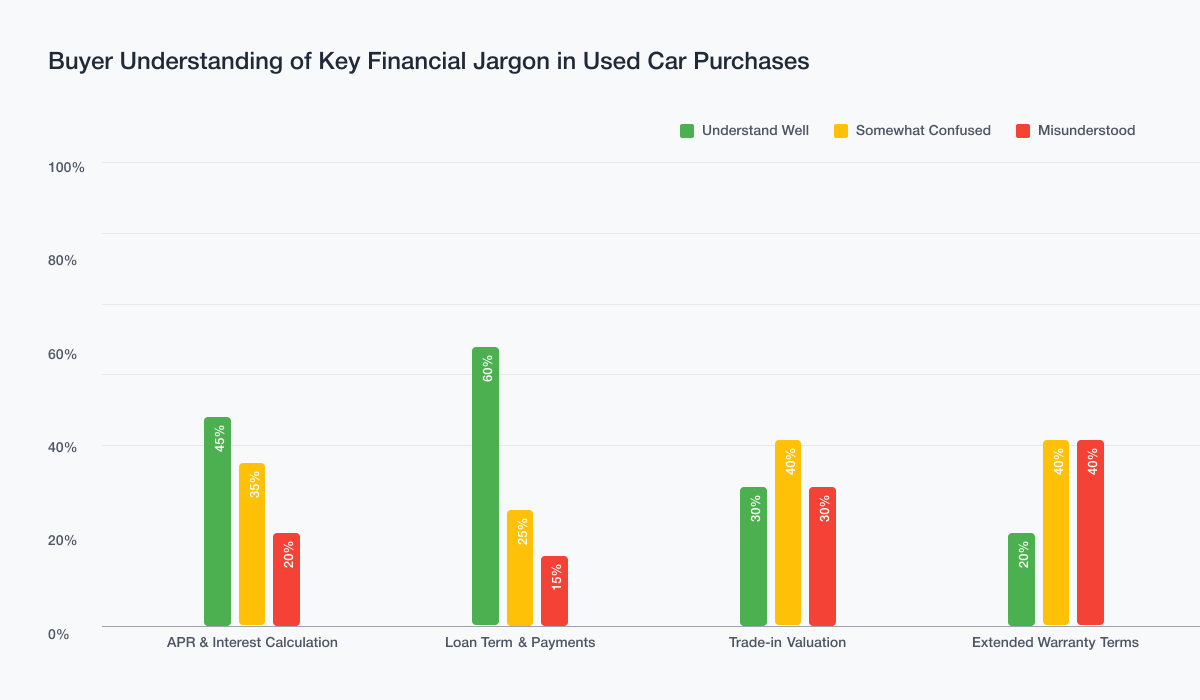
Key Finance Concepts
Understanding the core financial structures is paramount to choosing the right payment plan.
- 'APR' (Annual Percentage Rate) is a critical figure that represents the total cost of borrowing, including interest and any mandatory fees. A lower APR means you'll pay less over the life of the loan (the Financial Conduct Authority mandates clear APR disclosure to protect consumers).
- A 'Balloon Payment' is a significant, optional lump sum payment due at the end of certain finance agreements, most commonly PCP (Personal Contract Purchase) deals. This allows for lower monthly payments during the contract but requires a large payment if you wish to own the car outright.
- 'GMFV' (Guaranteed Minimum Future Value) is the estimated value of the car at the end of a PCP contract, as determined by the finance provider. It’s what the car is guaranteed to be worth if you return it, offering protection against depreciation.
Note: The GMFV is critical in PCP deals. If the car's market value at the end of the term is less than the GMFV, you can simply hand it back without making the balloon payment, effectively safeguarding you from excessive depreciation.
Understanding Ownership vs. Use
The choice of finance option significantly impacts whether you will ultimately own the vehicle.
| Finance Type | Primary Goal | Ownership | Monthly Payments | End of Term Options |
|---|---|---|---|---|
| HP (Hire Purchase) | Own the car | Yes (after final payment) | Higher | Own car after final payment |
| PCP (Personal Contract Purchase) | Use new car regularly | No (optional purchase) | Lower | Pay balloon/PX/Return car |
| PCH (Personal Contract Hire) | Long-term rental | No | Fixed | Return car |
- 'HP' (Hire Purchase) is a straightforward agreement where you pay a deposit and then fixed monthly payments. Once all payments are made, including an 'option to purchase' fee, you own the car.
- 'PCP' (Personal Contract Purchase) offers lower monthly payments compared to HP because you're essentially financing the depreciation of the car rather than its full value. At the end, you can pay the balloon payment to own it, part-exchange for a new car, or simply return it.
- 'PCH' (Personal Contract Hire), also known as leasing, is a long-term rental agreement. You never own the car, paying fixed monthly amounts for its use, then returning it at the end of the contract. This is ideal for those who prefer to always drive newer vehicles without the commitment of ownership.
Trading In Your Old Car
'Part Exchange' or 'PX' is a common practice where the value of your current vehicle is used as a partial payment towards your next one. This simplifies the selling process, as the dealership handles your old car. While convenient, always compare a PX offer against selling privately, as private sales can sometimes yield more.
Incentives
A 'Deposit Contribution' is an amount offered by the manufacturer or dealership towards your finance deposit, reducing the amount you need to pay upfront and potentially lowering your monthly payments. This is a common incentive during promotional periods and can make a deal significantly more attractive.
Understanding the nuances of car finance is critical to avoiding long-term debt traps and securing a deal that fits your budget.
Uncovering the Past: Vehicle History and Condition Jargon
Buying a used car is an exciting prospect, but its reliability and safety are intrinsically tied to its past. Knowing how to thoroughly investigate a vehicle's history is arguably the most crucial step in any used car purchase. Understanding key terminology empowers you to spot potential red flags and avoid costly mistakes.

Serious Red Flags: What to Watch Out For
Some terms signal dangers that can compromise a car's safety or legality, demanding high vigilance. Be highly vigilant if you encounter:
- 'Clocking': This illegal practice involves rolling back a car's odometer to falsely show a lower mileage. Lower mileage typically means a higher sale price, but it masks wear and tear. Worryingly, "Clocking" affects approximately 1 in 14 vehicles checked in the UK, according to recent data (HPI Check, 2024).
- 'Cut and Shut': This refers to two separate crashed cars being welded together, often a front half and a rear half. It's incredibly dangerous, illegal, and virtually impossible to repair safely. These vehicles typically derive from Category A or B write-offs (Cut 'n' Shut, 2024).
- 'Ringing': This sophisticated scam involves giving a stolen car the identity of a legitimate vehicle, often one that has been written off. Criminals swap Vehicle Identification Numbers (VINs) and documentation, making the stolen car appear legal.
Note: These practices are not only fraudulent but also pose severe safety risks, as the structural integrity of the vehicle is compromised.
Essential Documentation: Your Paper Trail
Always verify these critical documents to confirm a car's authenticity and legitimate history.
- 'Full Service History' (FSH): This means a complete record of all maintenance and repairs, usually stamped in a service book or digitally stored. A comprehensive FSH indicates a well-maintained vehicle, offering insights into its upkeep.
- 'V5C': Also known as the logbook, this is the vehicle's registration document issued by the DVLA. It confirms the registered keeper and provides essential details like make, model, and engine size. Ensure the person selling the car is the registered keeper.
- 'VIN' (Vehicle Identification Number): A unique 17-digit serial number found on the car itself (often on the dashboard, door jamb, or engine bay). The VIN on the car must precisely match the one on the V5C document (VIN Match, 2024). Discrepancies are a major red flag.
Background Checks: The 'HPI Check'
A comprehensive background check, such as an HPI Check, is indispensable for peace of mind. The most recognised in the UK is an HPI Check. Services like ChatMOT offer detailed vehicle history reports to help you make a safe choice. This service delves into critical aspects of a vehicle's past:
- Outstanding Finance: Reveals if the car has a loan attached to it that needs to be settled before ownership can legally transfer.
- Stolen Status: Confirms if the vehicle has been reported stolen.
- Written-off Status: Identifies if the car has previously been declared a write-off by an insurer.
- Mileage Verification: Cross-references recorded mileages with official databases to detect 'clocking' (HPI Check, 2024).
Understanding 'Written-off' Cars and Their Categories
A car is 'Written-off' when an insurer decides it's uneconomical to repair, typically because the cost of repair exceeds its market value. The categories for write-offs were updated in October 2017 to focus on structural safety, simplifying what was once a complex system. Knowing these updated write-off categories is vital for assessing a vehicle's repairability and safety.
| Category | Description | Road Legal After Repair? |
|---|---|---|
| A (Scrap) | Severely damaged, unsafe, must be crushed entirely. | No |
| B (Break) | Heavily damaged, cannot be repaired, chassis must be crushed, but parts can be salvaged. | No |
| S (Structural) | Sustained structural damage (e.g., chassis), but is repairable. | Yes, if professionally repaired and re-registered. |
| N (Non-Structural) | Sustained non-structural damage (e.g., cosmetic panels, electrics), but is repairable. | Yes, if professionally repaired. |
Categories S and N cars can be repaired and returned to the road, but it's crucial to obtain professional inspection reports detailing the repairs undertaken. Never overlook the importance of understanding these write-off categories (Write-off Categories, 2024).
Investing time in uncovering a car's full history with a thorough HPI Check and diligent document verification will provide profound peace of mind. Knowing these terms and how to apply them protects your safety and your investment, ensuring you acquire a vehicle whose past won't compromise its future.
Decoding Modern Car Technology Acronyms
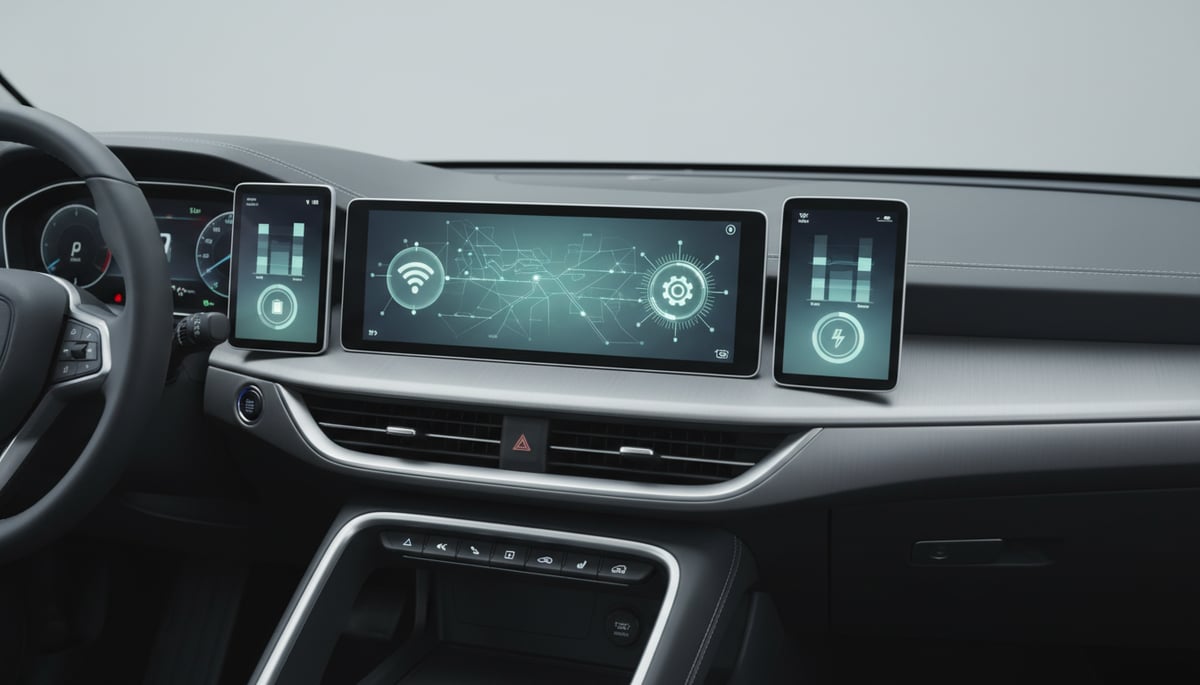
As newer used cars enter the market, advanced technology features are no longer exclusive to brand-new vehicles. Familiarity with modern car tech acronyms helps you identify valuable safety and convenience features that provide real-world benefits. These systems often represent significant advancements in automotive engineering.
Core Safety Systems: Protecting What Matters
Many modern used cars come equipped with sophisticated active safety features designed to prevent accidents or mitigate their severity.
- 'ABS' (Anti-lock Braking System): This fundamental system prevents your wheels from locking up under heavy braking, allowing you to steer while braking. It's a standard feature on all modern cars and significantly improves control during emergency stops (ABS, 2024).
- 'ESC' (Electronic Stability Control): Working alongside ABS, ESC detects and reduces loss of traction (skidding). It selectively applies brakes to individual wheels and/or reduces engine power to help keep the car stable, particularly in slippery conditions or during sudden manoeuvres (ESC, 2024).
- 'AEB' (Autonomous Emergency Braking): This advanced system uses sensors to detect an impending collision and can automatically apply the brakes if the driver doesn't react in time. AEB has been proven to significantly reduce rear-end collisions (AEB, 2024).
Driver Assistance: Enhancing Comfort and Convenience
These driver assistance features make driving less stressful and more enjoyable, especially on longer journeys.
- 'ACC' (Adaptive Cruise Control): Unlike traditional cruise control, ACC maintains a set distance from the vehicle ahead. It automatically speeds up or slows down to match the flow of traffic, making motorway driving considerably more relaxed (ACC, 2024).
- 'HUD' (Head-Up Display): A HUD projects important driving information, such as speed, navigation directions, or warning symbols, directly onto the windscreen within the driver's line of sight. This allows you to keep your eyes on the road more effectively (HUD, 2024).
Drivetrain Technology: Power and Traction
Understanding how power is delivered to the wheels can significantly impact a car's handling and capability.
- '4WD' (Four-Wheel Drive): Typically found in SUVs and off-road vehicles, 4WD systems are often manually engaged and designed for challenging terrain, providing maximum traction at lower speeds.
- 'AWD' (All-Wheel Drive): More common in modern cars and crossovers, AWD systems automatically distribute power to all four wheels as needed. They provide improved grip and stability in adverse weather conditions without driver intervention.
In-Car Entertainment: Connectivity and Information
The interior experience is increasingly driven by technology that seamlessly integrates with our digital lives.
- 'MirrorLink': This technology mirrors your smartphone's display onto the car's infotainment screen, allowing you to access compatible apps like navigation or music directly from the dashboard.
- 'Virtual Cockpit': Replacing traditional analogue dials, a virtual cockpit is a customisable digital screen that displays instruments, navigation, and infotainment information. This provides a modern, high-tech feel to the driver's view.
Familiarising yourself with these acronyms helps you confidently navigate the features list of modern used cars, ensuring you pick a vehicle equipped with the safety and convenience features that offer genuine value.
Frequently Asked Questions (FAQs)
Navigating the used car market can throw up unique scenarios and specific questions. This FAQ section addresses some common queries that might arise, offering clarity and helping you make an informed choice. Addressing these specific queries provides the final layer of clarity and confidence for a prospective car buyer.
What is a 'pre-reg' car?
A 'pre-reg' car is a brand-new vehicle registered by a dealership, often offering a significant discount on a nearly new car. While it might still be in showroom condition, you will be listed as the second owner on the V5C document. This can sometimes offer a significant discount on a nearly new car (Pre-reg, 2024).
What's a 'Q Plate'?
A 'Q Plate' is issued when a vehicle's age or identity is in doubt, often making it challenging to insure. It's a registration number starting with the letter 'Q'. This usually applies to kit cars, radically modified vehicles, or imports where the original identity cannot be confirmed. Cars with Q Plates can be challenging to insure due to their unknown history (Q Plate, 2024).
Is an ex-demonstrator a good buy?
Ex-demonstrator cars typically offer high-spec models at a reduced price due to low mileage and good maintenance. Generally, yes. An 'ex-demonstrator' (or 'ex-demo') car is one that has been used by a dealership for test drives or as a staff car. They typically have low mileage, are well-maintained, and are often high-specification models. The dealership will be listed as the first owner. You can often secure a high-spec car at a reduced price (Ex-demo, 2024).
What is a 'Lemon'?
A 'Lemon' is a slang term for a car with numerous, persistent defects, making it unreliable and expensive to own. These issues can make the car unreliable, expensive to fix, and frustrating to own. While typically associated with new cars, a used car can also turn out to be a lemon if issues were masked (Lemon, 2024).
Understanding these specific terms empowers you to make confident decisions in diverse buying situations.
Navigating the UK used car market no longer needs to feel like an insurmountable challenge. This guide has aimed to equip you with the essential vocabulary, demystifying jargon to approach any forecourt with clarity and purpose.
Here are your key takeaways:
- Mastering Diverse Jargon: Deciphering terms across finance, vehicle specifics, and modern technology is fundamental to understanding your potential purchase.
- Identifying Critical Red Flags: Recognising warning signs like 'clocking' and understanding write-off categories protects you from costly mistakes and unsafe vehicles.
- Empowering Confident Decisions: Armed with the correct terminology, you can ask precise, informed questions, ensuring transparency and trust in your transaction.
While the used car market can present its complexities, thorough preparation and knowledge transform it into a navigable landscape. This foundational understanding allows you to look beyond the surface, preventing regrettable purchases.
To solidify your confidence and make truly informed decisions, verifying a vehicle's history with comprehensive, data-driven insights is your crucial next step. Leverage trusted tools like ChatMOT that provide instant, reliable information on MOT history, outstanding finance, and recorded discrepancies. This detailed verification is essential for uncovering any hidden issues. Such a proactive approach safeguards your investment and ensures peace of mind. Ultimately, you will drive away with a vehicle that truly meets your expectations.